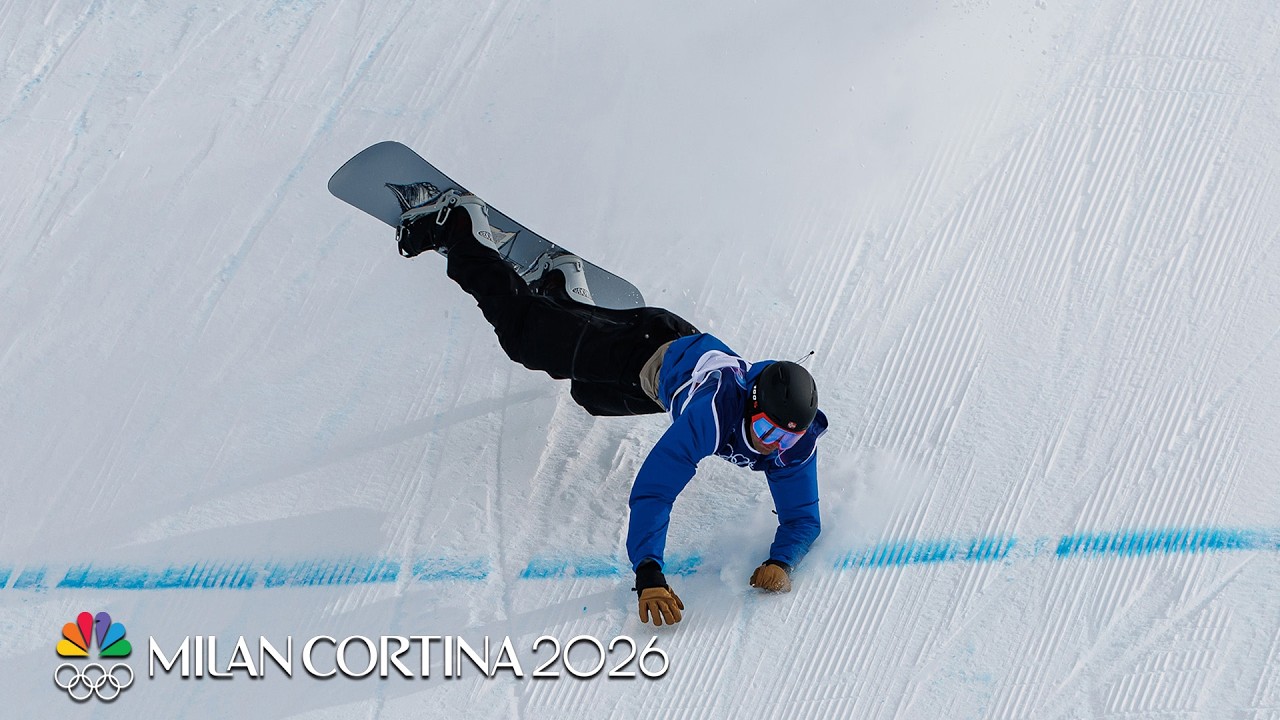
The Milano Cortina 2026 Winter Olympics brought an electrifying blend of athletic prowess and unpredictable alpine drama, particularly within the world of snowboarding. One of the most anticipated spectacles, the 2026 Winter Olympics Men's Snowboarding Slopestyle final, delivered on all fronts, captivating audiences with its high-flying action and nail-biting finishes. Hosted at the state-of-the-art Livigno Snow Park on what was aptly dubbed 'Teams Day,' this event was not without its challenges. Heavy snowfall, a recurring theme across the northern Italian Alps, led to early disruptions and schedule shifts, adding an extra layer of intensity and mental fortitude to an already demanding competition.
Slopestyle snowboarding is a dynamic discipline that combines creativity, precision, and raw courage. Riders navigate a custom-built course featuring a variety of obstacles such as jumps, rails, and quarterpipes. Their goal is to perform a sequence of tricks with maximum difficulty, flawless execution, and impeccable style. For the athletes competing in the men's slopestyle final at Livigno, every jump, every grind, and every landing was magnified by the Olympic stage, where dreams are forged and legends are made.
Livigno Snow Park: The Epicenter of Olympic Snowboarding Action
The picturesque setting of Livigno, nestled in the heart of northern Italy, provided a breathtaking backdrop for the snowboarding events. The Livigno Snow Park, specifically designed to challenge the world's best, featured a meticulously crafted slopestyle course. This arena was engineered to inspire greatness, boasting a layout ripe for "big air, clean rails, and massive amplitude." The design encouraged progressive riding, allowing athletes to push the boundaries of what's possible on a snowboard.
What makes a slopestyle course truly Olympic-worthy? It’s a delicate balance. It must be challenging enough to differentiate the elite, yet safe enough for high-speed, high-consequence tricks. The Livigno course struck this balance perfectly, offering multiple lines and features that allowed riders to showcase their individuality and strategic approach. From technical rail sections demanding precision to massive kickers requiring perfect timing and air awareness, every element contributed to a truly spectacular contest.
Understanding the Slopestyle Format and Judging
The men's slopestyle final at the 2026 Winter Olympics, like its predecessors, followed a tried-and-true format designed to ensure fairness and reward consistent excellence. Each finalist was granted three decisive runs down the course. Only their best score from these three attempts counted towards their final ranking, creating a fascinating strategic dynamic:
- Run 1: The Tone Setter. Often used to lay down a solid, clean run to ensure a competitive score on the board.
- Run 2: The Fine-Tuner. Athletes might attempt to increase difficulty or clean up imperfections from their first run.
- Run 3: The Make-or-Break Moment. With everything on the line, this is where champions often deliver their most ambitious and spectacular performances.
Judges play a critical role in this high-stakes environment. They scrutinize every aspect of a rider's run, evaluating several key criteria:
- Difficulty: The complexity of the tricks performed.
- Execution: The flawless landing and control throughout the run.
- Amplitude: How high riders go on jumps and how much air they get.
- Variety: The range of tricks, rotations, and grabs demonstrated.
- Overall Flow: The seamless connection between features and the aesthetic appeal of the run.
A single error can be incredibly costly, potentially costing an athlete a medal. Conversely, a single, perfectly executed run can make history. This unforgiving nature is precisely why fans are so drawn to snowboarding slopestyle – it's a raw combination of style and danger, where appearing carefree is as important as the tricks themselves.
The Stars Align: Key Athletes and Their Olympic Journey
Among the constellation of stars vying for Olympic glory, names like Canada's seasoned veteran Mark McMorris and China's prodigious talent Su Yiming stood out as leading contenders. McMorris, with a reputation for consistent technical depth and the ability to execute high-level tricks under immense pressure, brought years of experience and multiple Olympic medals to the challenging Livigno course. His presence alone commanded respect, as he's known for pushing the sport's boundaries for over a decade.
Su Yiming, on the other hand, represented the sport's dynamic future, celebrated for his innovative approach, massive air time, and seemingly limitless progression. His youthful exuberance and fearless attitude made him a crowd favorite and a formidable competitor. As the competition unfolded, the stakes were incredibly high, culminating in a performance that would etch his name into Olympic history. Indeed, China's Su Yiming ultimately secured the coveted gold medal in the men's snowboard slopestyle at the 2026 Winter Olympics, a triumph made even sweeter by coinciding with his birthday. For a deeper dive into his historic performance, read our dedicated coverage: Su Yiming Wins Gold: 2026 Winter Olympics Men's Snowboarding Slopestyle Final.
Beyond these two titans, the field was stacked with other world-class riders, each bringing their unique style and arsenal of tricks. The beauty of slopestyle lies in this diversity, ensuring a truly unpredictable and thrilling contest from start to finish. The pressure on these athletes, especially after weather-related delays, was immense, demanding not just physical prowess but incredible mental fortitude.
Navigating the Schedule: "Teams Day" and Weather Challenges
Day 12 of the Milano Cortina 2026 Winter Olympics, affectionately dubbed "Teams Day," was jam-packed with nine medal events across six sports. However, the path to the snowboarding finals was anything but smooth. Early disruptions caused by heavy snowfall in northern Italy forced the rescheduling of several events, including the men's and women's slopestyle finals.
These weather-induced shifts presented unique challenges for the athletes. Maintaining peak physical condition and, more critically, mental sharpness over an extended period requires immense discipline. Riders had to remain "mentally alert and physically fit," transforming what was already a high-pressure environment into an even more intense crucible. The ability to adapt to changing conditions, both on the course and in the schedule, became a key factor in who would ultimately stand on the podium.
The revised schedule for the Men's Snowboarding Slopestyle Final saw the action unfold on what became a truly memorable day:
Men's Snowboarding Slopestyle Final Schedule (All times approximate, based on local Livigno time)
- Men's Slopestyle: Run 1
- 3:50 PM (Local Time)
- 5:20 AM (Pacific Standard Time)
- 11:20 AM (Eastern European Time)
- Men's Slopestyle: Run 2
- 4:18 PM (Local Time)
- 5:48 AM (Pacific Standard Time)
- 11:48 AM (Eastern European Time)
- Men's Slopestyle: Run 3
- 4:46 PM (Local Time)
- 6:16 AM (Pacific Standard Time)
- 12:16 PM (Eastern European Time)
Following the men's captivating performance, the Women's Snowboarding Slopestyle Final, which had also been postponed from Tuesday due to the heavy snow, finally took center stage. This allowed defending champion Zoi Sadowski-Synnott to showcase her incredible talent, ensuring a full day of high-end snowboarding excitement. The women's competition also kicked off with Run 1 around 7:00 PM local time, extending the Olympic thrills into the evening.
The battle for Olympic gold is rarely straightforward, especially when external factors like weather disruptions come into play. The mental and physical demands on athletes in Livigno were immense, creating a palpable tension with every run. To understand the intricacies of this high-stakes contest, explore Snow and Pressure: Inside the 2026 Men's Slopestyle Olympic Gold Battle.
Conclusion
The 2026 Winter Olympics Men's Snowboarding Slopestyle final at Livigno Snow Park was a true testament to the spirit of the Olympic Games: a blend of unparalleled athletic performance, unyielding determination in the face of adversity, and unforgettable drama. From the challenging course design to the weather-induced schedule changes and the stellar performances of riders like Mark McMorris and eventual gold medalist Su Yiming, every element contributed to a spectacle that will be remembered for years to come. It was a celebration of innovation, style, and the sheer joy of snowboarding, leaving fans eagerly anticipating the next chapter in Olympic winter sports history.